


Reflection cards
Three quiet questions to ask after the story — about what your child noticed, what they felt, what they wonder. No right answers. Tucked into every story.
How reflection questions workPersonalised stories that help you and your child reconnect after tantrums, tears, and hard moments.


Hi, I’m Nuri.You tell me what happened. I explain what’s going on for your child — and then I write a story you can read together, with something small to do after. Three minutes, three steps.
A few sentences are enough. “She wouldn’t share. Bedtime was a battle.” I’m listening for the feeling underneath — not just the behaviour.

You get a short, clear analysis: what’s happening developmentally, why this behaviour is normal for their age, and one or two practical things you can try right now.

A personalised story to read together that names the feeling and opens the door to connection. Plus a small offline activity to carry the moment beyond the screen.

A four-year-old can’t tell you what’s happening inside. They can’t say “the transition overwhelmed my nervous system.” What they can do is throw the shoes. The tantrum is the language they have right now — and meeting it with another language helps more than meeting it with logic.
Children's words are smaller than their feelings. The tantrum, the shutdown, the door slam — that's the body running out of other ways to say it.
“We’re a storytelling app, not a therapeutic tool. AI lets us shape every story to your child and your words — and the craft underneath each one comes from forty years of research into how children actually work.”
Attachment theory · Co-regulation · Narrative repair · Polyvagal lens
Read the research in our journalEvery story is personalised — your child’s name, the situation in your words, the theme that fits the moment. This is the shape they take.
Around 5 minutes, read together. Illustrated covers. A typeface that feels like it came from a book for the same warmth as the picture books on your shelf.





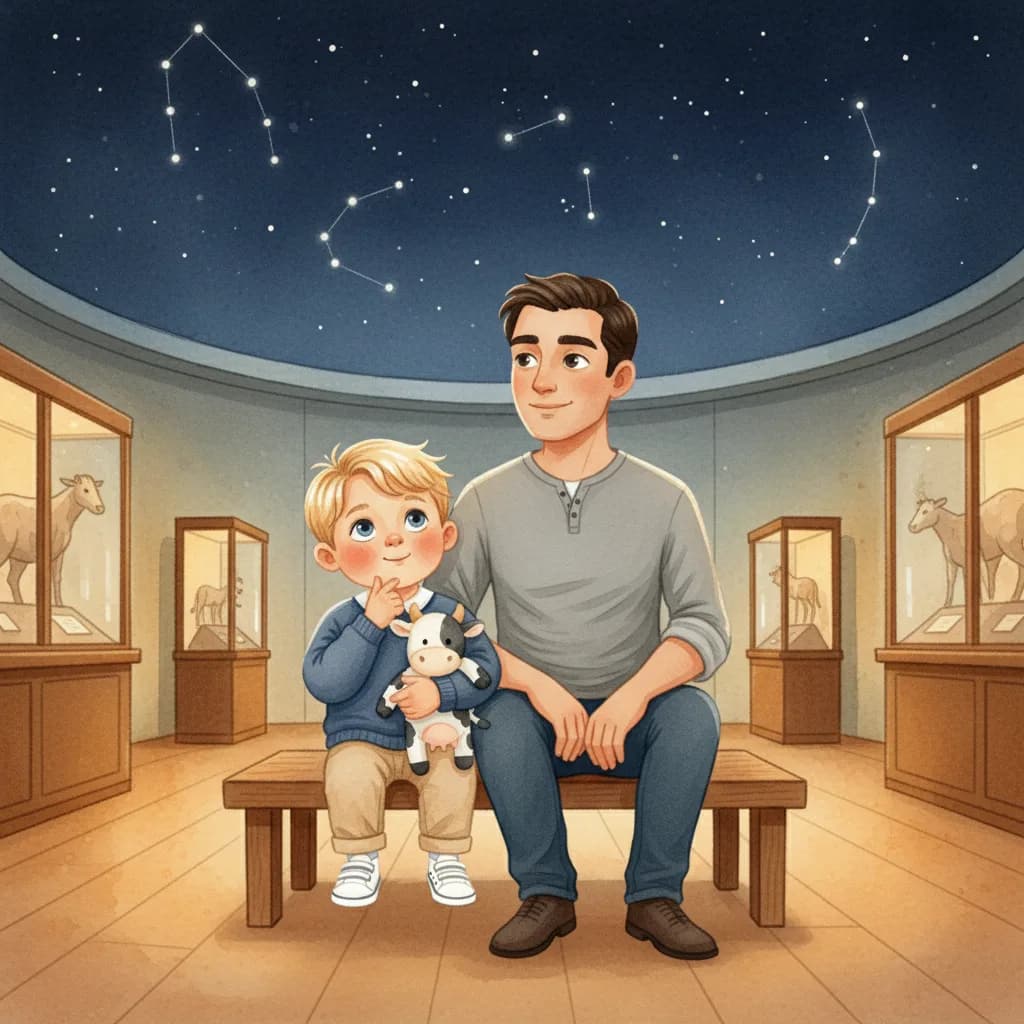
The museum was wide and cool and full of old, wonderful things. Lumi walked in holding KuhKuh under his left arm, the little brass bell making the softest chime with each step. The ceiling above them was painted deep blue-black, scattered with tiny lights shaped into constellations — the same stars you could see on a clear night outside, but still and safe here above their heads. Papa crouched beside him at the entrance. “Ready, explorer?” he asked. Lumi looked up at the stars, then down the long hallway where the first great fossil waited, enormous and quiet. Something in his chest lifted. He nodded once, and walked forward.
Two small things printed with every story, made to outlive the screen.
Three quiet questions to ask after the story — about what your child noticed, what they felt, what they wonder. No right answers. Tucked into every story.
How reflection questions work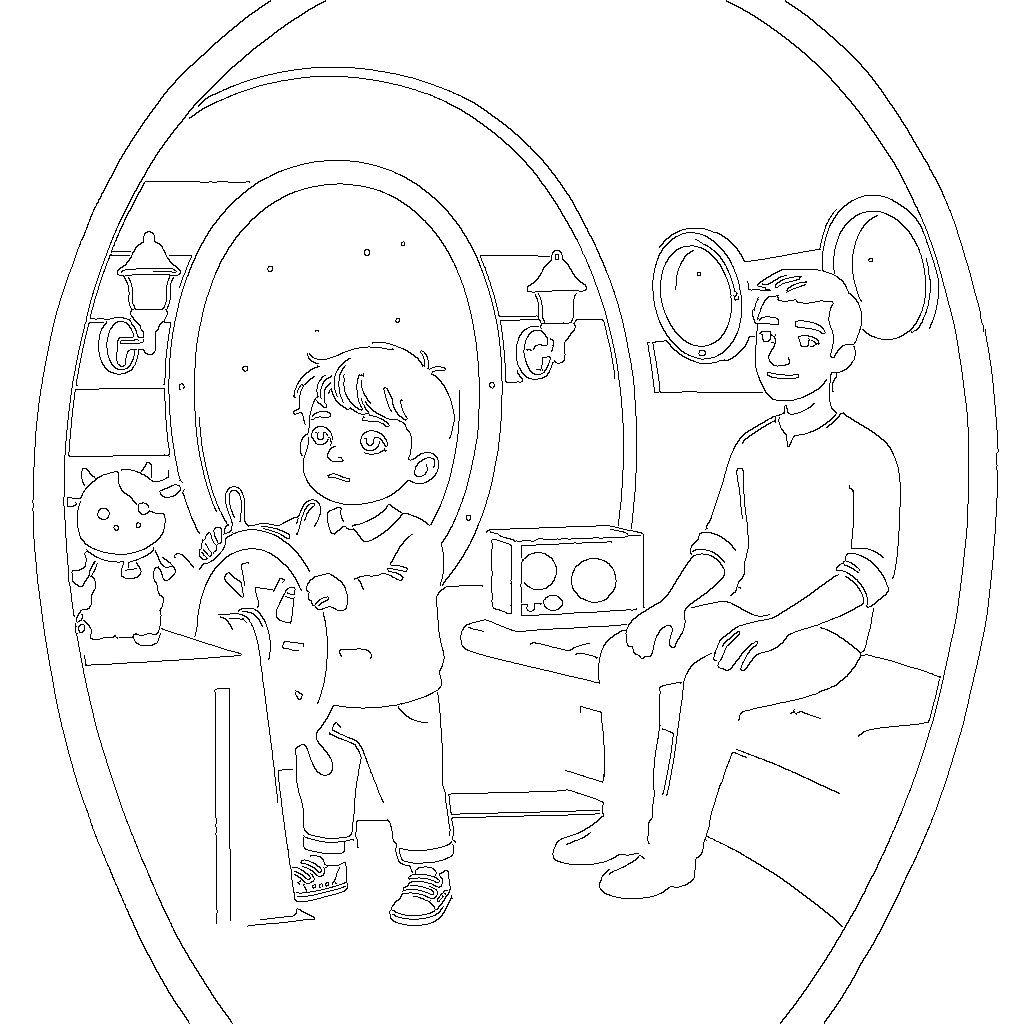
A scene from your story, ready to print. Colour it together at the kitchen table — the conversation tends to find its way out as the crayons come out.
Why colouring together works
I created Nuri Tales because I love stories and I believe in their magic. A story shared together changes the atmosphere of a room. It gives big feelings somewhere to go, and hands parents the words they couldn’t quite find in the heat of the moment. However the day went, a story is always a way back to each other.
Three stories included — the whole experience, nothing held back. Try it, see the change.
 Most loved
Unlimited stories with everything included — colouring pages, reflection cards, and the parent companion.
No — and we say that clearly inside the app too. Nuri Tales is a storytelling app that helps families reconnect; it doesn't diagnose, treat, or replace professional support. We take that line seriously in the product itself: every request passes a safety check before a story is written, and when a situation calls for more than a story, the app says so honestly instead of generating one. If you're worried about your child, please talk to your paediatrician or a child psychologist — that's always the right call.
Read more: Where to find real help in Europe
Best for children 3 to 8. The reading level and narrative complexity adjust to your child's age — ages 3–4 receive short, sensory, concrete stories; ages 5–6 encounter internal dialogue and conflicting emotions; ages 7–8 explore multiple viewpoints and ethical nuance. Some four-year-olds love it; some ten-year-olds still ask for one.
Read more: The empathy window: ages 4 to 6
Prompting an AI gets you a story: you type, it invents something, and that's the end of it. Nuri Tales is a whole cycle of understanding built around one hard moment — grounded in attachment research, developed with child psychologists, and nothing reaches your family without passing the ethical checklist we run on every single story:
It starts with understanding you: Before a single story line is written, Nuri looks at what happened and explains it to you in plain words — what the behaviour is doing for your child developmentally, why it's normal, and what you can try right now. You get the why, not just a bedtime story.
The story is built for your child's brain: Not just their name pasted into a template. The narrative structure, emotional pacing, and language adapt to your child's age and what their brain can actually hold — a three-year-old gets short and sensory, a seven-year-old gets perspective and nuance.
It reconnects you, not just entertains them: The story names the feeling, lets your child watch a character carry it from a safe distance, and opens the door back to you. It's read together, on one device — the point is the repair between you two, not the screen time.
It continues off the screen: Three reflection questions, a colouring page, and a search-and-find picture from the story's own world carry the conversation to the kitchen table — crayons out, screen away.
That's the difference: a generic AI hands you a story. Nuri Tales is built to support caregivers and children together — a journey that meets you in all the situations a day with kids brings, from understanding what happened, to reconnecting, to the conversations that come after. The little helper you always wanted for the biggest job there is: helping a child grow.
Read more: I build with AI — I also have serious concerns · The ethical checklist we run before every story · Why the right story at the right moment
More than the story itself. Every story arrives fully illustrated with its own cover. Alongside it you get a short note for you — what's going on developmentally, and how to follow up gently. And after the last page: three quiet reflection questions to ask together, a colouring page drawn from a scene of your story, and a search-and-find picture from your story's world. Every story includes all of it.
Read more: Three little questions · Why the best conversations happen side by side
Your first three stories are free — the whole experience, nothing held back. After that, Premium unlocks unlimited stories with everything included for €12,99 a month or €119,99 a year (about two months free). Not ready for Premium? Inviting a friend earns you both an extra free story.
Right now, Nuri Tales is available in English. German, Spanish, French, Italian, and Portuguese are in preparation and will be released soon — both the interface and the stories. We translate carefully; the warmth has to survive the language change.
Nuri Tales lives on your phone, ready when the day falls apart. Three minutes of story, and the room is softer.